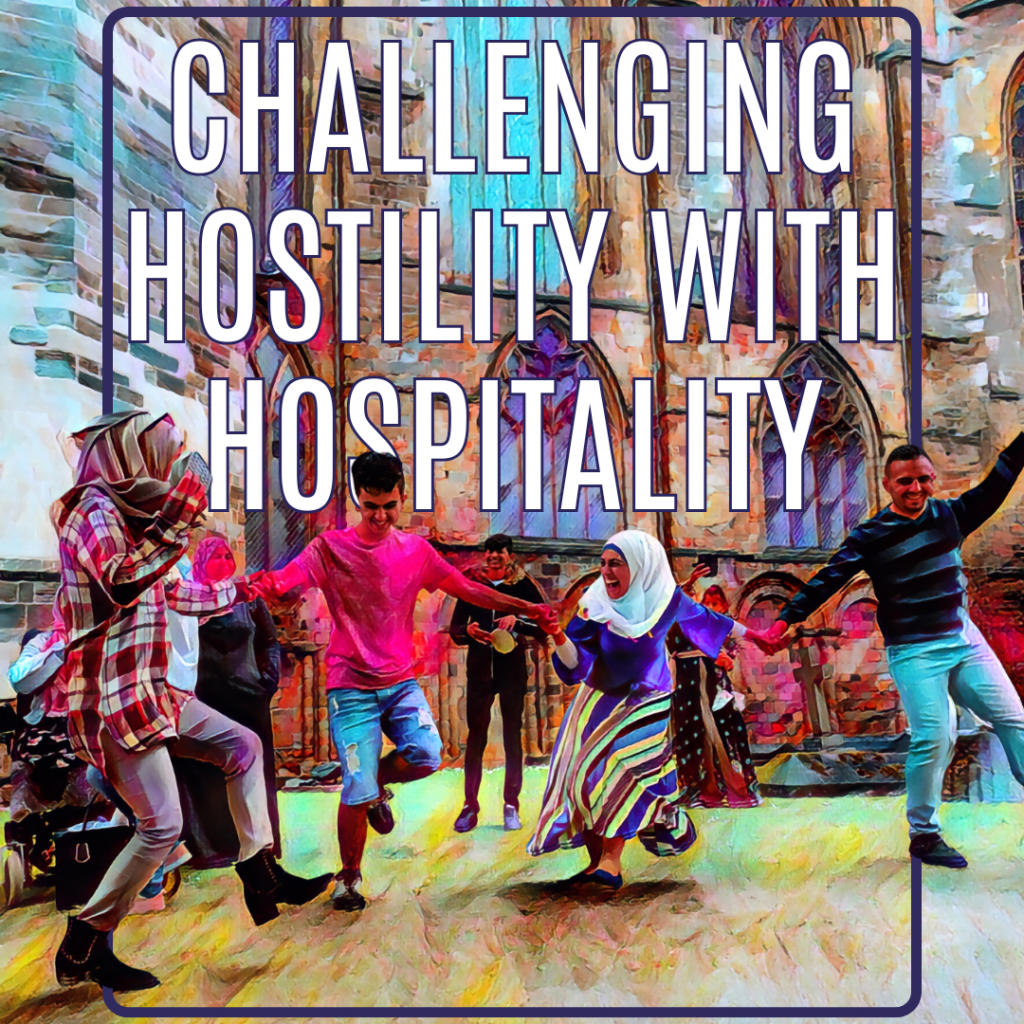
We are living in challenging times.
Hostility towards people with darker shades of skin is rising. People fleeing danger to their lives are being met with suspicion instead of safety. And in the middle of all of this, there is a question quietly waiting for every congregation to answer:
What kind of community do you want to be?
Church of Sanctuary is one meaningful, practical, and deeply biblical answer to that question.
“It is in the shelter of each other that people live” – Celtic Proverb
Where Did This Come From?
The Church of Sanctuary movement grew out of the City of Sanctuary movement, which began in Sheffield in 2005. Sheffield became the UK’s first City of Sanctuary in 2007.
Since then, the vision has spread to over 100 cities, towns, villages, boroughs, and places across the country. Two thirds of UK universities are now Universities of Sanctuary. There are schools, theatres, libraries, and gardens of sanctuary.
But what about churches?
The Church of Sanctuary initiative is a faith stream within the wider City of Sanctuary movement. It is faith-based, rooted in history, and a call to prophetic Christian witness. It is now being developed and promoted as an ecumenical priority through Churches Together in Britain and Ireland (CTBI).

This Is Not a New Idea
As far back as a thousand years ago, churches and cathedrals in Britain and Ireland offered sanctuary to those in need. The Christian tradition runs deep.
It is rooted in the Hebrew concept of Cities of Refuge (Numbers 35, Joshua 20). Places of safeguarding, protection, and hospitality. The association of sanctuary and holiness is universally recognised. Where God is honoured, holiness is centred on the presence of God (Exodus 25:8).
Hospitality is the face of social holiness.
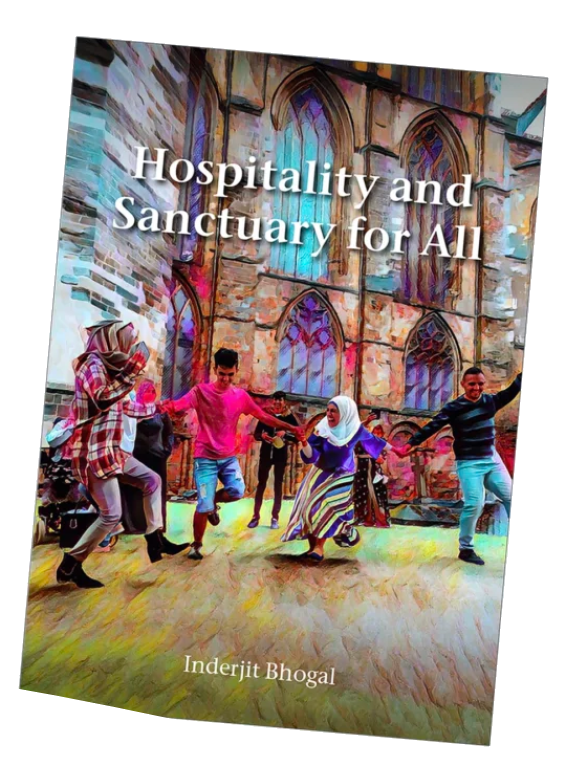
THE STUDY GUIDE
To obtain your copy of the Hospitality and Sanctuary for All study guide, click the button below:
Why Become a Church of Sanctuary?
The call to welcome the stranger is not a footnote in Scripture. It is one of the most repeated ethical requirements in the Hebrew texts:
“Love your neighbour as yourself” – Leviticus 19:18 “Love the stranger as yourself” – Leviticus 19:34
Jesus echoes it clearly in the story of the Good Samaritan (Luke 10:29–37) and in his words about how we treat the most marginalised among us (Matthew 25:35–40).
Love your neighbour AS YOURSELF
When Jesus told the story of the Good Samaritan, he upheld the capacity of all people to live with hospitality and to refuse to live by hatred. “Love your neighbour” is a rallying call for neighbours everywhere.
As followers of Jesus, we are called to declare and live out his gospel. A gospel that insists:
Christ’s love transcends all borders
Watch the presentation
In this talk, Inderjit Bhogal, one of the founders of the City of Sanctuary movement, shares the vision, the biblical roots, and the practical steps behind becoming a Church of Sanctuary.
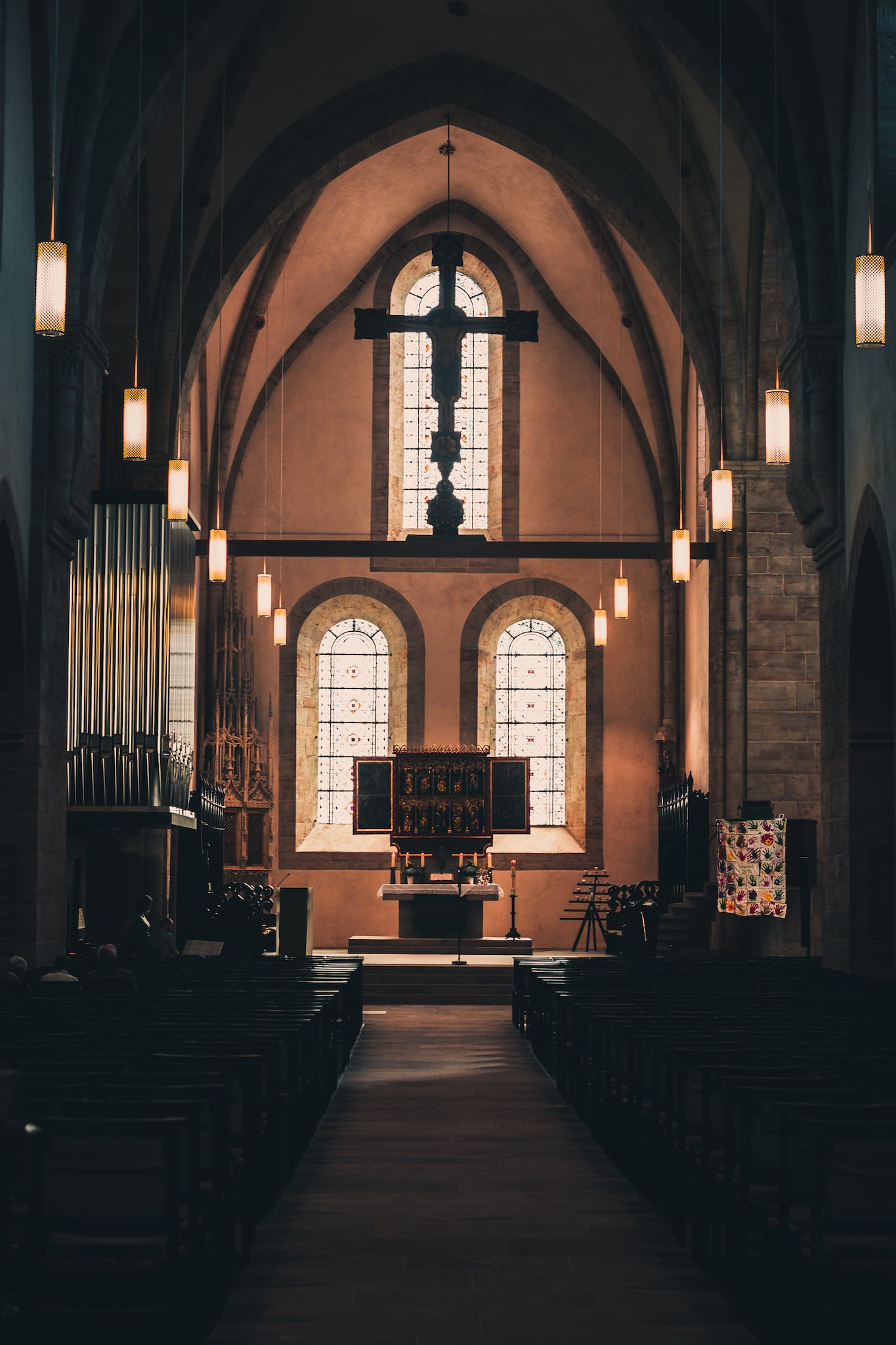
What Does a Church of Sanctuary Actually Do?
All churches take pride in welcoming all. Church of Sanctuary is about going further. Standing with refugees and people seeking sanctuary, not just opening a door.
In a Church of Sanctuary, the whole congregation works together to:
This is the work of the whole congregation. Don’t leave it only to those in office or to those with a particular passion for the cause. Buildings can provide shelter, but true sanctuary is best provided in human warmth, community, and relationships.
Is This Political?
Church of Sanctuary is not a campaigning political movement. It is a biblically inspired prophetic initiative, challenging hostility with hospitality.
That said, engaging with justice is in keeping with the style of the biblical prophets: speaking truth to power with passion and compassion. Whole congregations have written to government ministers to challenge injustice in immigration policy, or supported vigils for those in need. That is not politics for its own sake. It is faithful witness.
Church of Sanctuary is also not about opening your building for people to live in. It is about building communities of hospitality and sanctuary. Human warmth and welcome are the sanctuary we all hold and bring into relationships.
How Do You Become a Church of Sanctuary?
The journey matters more than the certificate.
Year One — Explore
Sanctuary Sunday, traditionally the Sunday at the end of Refugee Week each June, is a natural moment to raise and launch the idea.
Your congregation can commit to spending twelve months exploring what it means to be a Church of Sanctuary by:
Keep a broad, inclusive reach throughout. Ensure that people seeking sanctuary and refugees are integral to your discussions and developments wherever possible. This is about working together, not doing things for others.
Year Two — Commit
At the following Sanctuary Sunday, brief your congregation on progress and consider your next steps. Invite refugees to share their stories.
You might decide to apply for formal Church of Sanctuary recognition. The application form is available from the CTBI website. It is not a tick-box exercise, but a further learning journey.
You can also engage in this work alongside other congregations in your area and seek to become a Parish or Circuit of Sanctuary.
What Does Recognition Mean?
The Church of Sanctuary award is a statement by your congregation. It is a declaration of your inclusive values of welcome, hospitality, and safety for all. It is something to celebrate and to share, and it will be an inspiration to others.
But the award is not the end. It is an important stage on an ongoing pilgrimage. It is less about displaying a certificate and more about learning together and building communities of sanctuary, and in the process, strengthening refugee voices and leadership.
A Story Worth Sharing
One small congregation explored the whole process within Sunday worship. Over four months, they devoted one Sunday a month to the key themes. Already involved in supporting refugees, the process brought the whole congregation together in thought and prayer, and they went on to apply for Church of Sanctuary recognition.
Their minister, Pastor Gerard Goshawk of Six Ways Erdington Baptist Church in Birmingham, put it simply:
“We are a Church of Sanctuary. This is who we are. Being inclusive is natural and a joy. It encourages others to follow the example. More opportunities to serve, to advocate, and to celebrate have come our way since we took this step.”
Urban or rural, it doesn’t matter if there are no refugees in your area. This work is about informing ourselves, tackling prejudice wherever it lives, and pointing to what Paul calls “a more excellent way” (1 Corinthians 12:31). A way of love and compassion that is at the very heart of the gospel.
For me, this work is integral to seeking justice and righteousness. True hospitality is the face of social holiness.
Go for it.
Inderjit Bhogal, 4th April 2026
To find out more, visit the CTBI Church of Sanctuary website or the City of Sanctuary website. The book Hospitality and Sanctuary for All is available from CTBI for a donation to cover costs.
WANT TO FIND MORE FROM INDERJIT?
Pause For Thought is featured on BBC Radio 2. It is hosted on the OJ Borg programme at 2.30am (GMT). Inderjit contributes regular short reflections on various topics, often related to spirituality, philosophy and personal experiences. Inderjit provides a moment of reflection and contemplation offering you a brief pause. Here, Inderjit shares his insights and wisdom, to inspire you, encourage you, or provide a moment of reflection before you start the day.